
SEO is changing fast. In 2025, Google and other search engines are no longer just looking for the right keywords, and neither should you.
They focus now should be in delivering full answers, high-quality content, and most importantly, better experiences for users.
That’s where SXO — Search Experience Optimization — comes in.
This guide explains what SXO means, how it works, and how you can adapt your SEO strategy for accordingly.
What Does SXO Mean?
SXO stands for Search Experience Optimization. It combines traditional SEO with user experience (UX) and content quality.
Simply: SEO helps people find your site. SXO helps them get real answers, stay longer, and find your content trustworthy.
Search engines today care not just about keywords, but about how useful and helpful your content is for real people.
What Is SXO in Marketing?
In digital marketing, SXO means optimizing the full experience for your website visitors. This includes:
- Helpful and clear content
- Easy-to-read pages
- Fast page loading
- Mobile-friendly design
- Clear calls to action
Well-executed SXO helps turn visitors into leads or customers. You don’t just rank higher but you convert better.
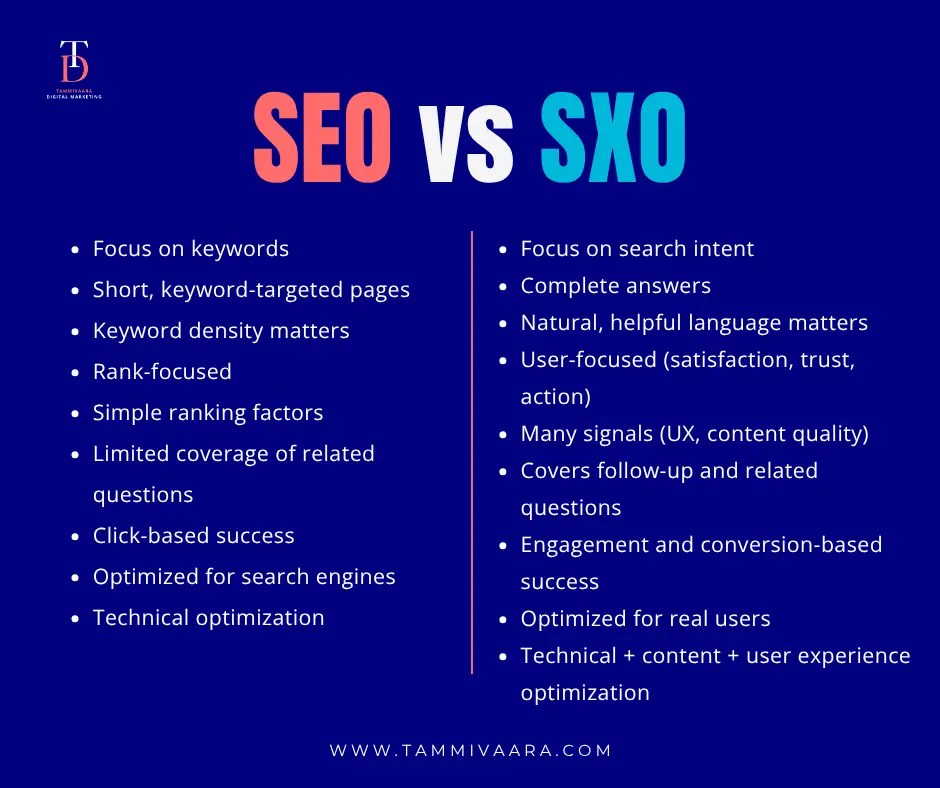
How Is SXO Different From Traditional SEO?
Traditional SEO:
- Focuses on keywords
- Writes short posts targeting specific search terms
- Measures rankings and traffic
SXO:
- Focuses on real search intent
- Covers full answers and related questions
- Improves content structure and usability
- Supports conversions and builds trust
SXO is about genuinely helping users! And that’s exactly what AI-powered search rewards.
Why Does SXO Matter for AI Search?
Google’s AI Mode and Deep Search systems now summarize content for users. They pull answers directly from pages they see as high-quality.
If your content gives short or incomplete answers, you may unfortunately be left out. But if your content explains topics fully and clearly, AI search may feature your site in its answers.
SXO helps your content become AI-ready by:
- Covering full topics
- Answering follow-up questions
- Providing helpful examples
- Being easy to read and understand
What Are the Benefits of SXO?
- Higher rankings: Google favors helpful, well-structured content.
- Better AI visibility: Your page is more likely to appear in AI-generated answers.
- More engaged visitors: People stay longer when they find useful answers.
- Better conversions: Clear and helpful content supports customer decisions.
- Stronger trust: High-quality information builds long-term authority.
What Is the SXO Strategy?
A strong SXO strategy includes:
- Researching what your audience really wants to know
- Writing clear and complete answers
- Covering follow-up and related questions
- Using simple language
- Structuring pages with clear headings
- Including examples
- Optimizing for speed and mobile
- Building trust with honest, expert content
In AI-powered search, search engines reward content that feels like a helpful guide and not just a list of keywords.
Example: SEO vs SXO
Let’s say you write a blog post about 5 Best SEO Tools in 2025. Here are examples how it would be done in an old SEO style and new SXO styles (Of course, these examples are very simplified, but you get the idea. In real articles, the explanations would be more complete.)
Old SEO style:
“Here are the best SEO tools in 2025:
- Ahrefs — good for backlinks
- SEMrush — good for keywords
- Moz — good for beginners
- Screaming Frog — good for technical SEO
- Google Search Console — free.”
SXO style:
“Choosing the best SEO tool depends on your goals.
Ahrefs helps analyze backlinks and monitor link profiles.
SEMrush offers full SEO reports, keyword research, and competitor tracking.
Moz is great for beginners with simple keyword tracking and link analysis.
Screaming Frog scans your site for technical issues like broken links or missing tags.
Google Search Console monitors your site performance and indexing for free.“
The SXO version gives readers (and AI) much more useful information.
SXO Checklist
- Focus on real search intent: What is the user really looking for?
- Write clear, complete answers that fully explain the topic.
- Cover possible follow-up questions and related topics.
- Use simple, natural language that’s easy to understand.
- Structure your content with clear headings and subheadings.
- Add helpful examples, explanations, and context.
- Optimize for mobile devices and fast page loading.
- Build trust with accurate, expert-level information.
- Use visuals (images, tables, charts) to support understanding.
- Include clear next steps or calls to action for the user.
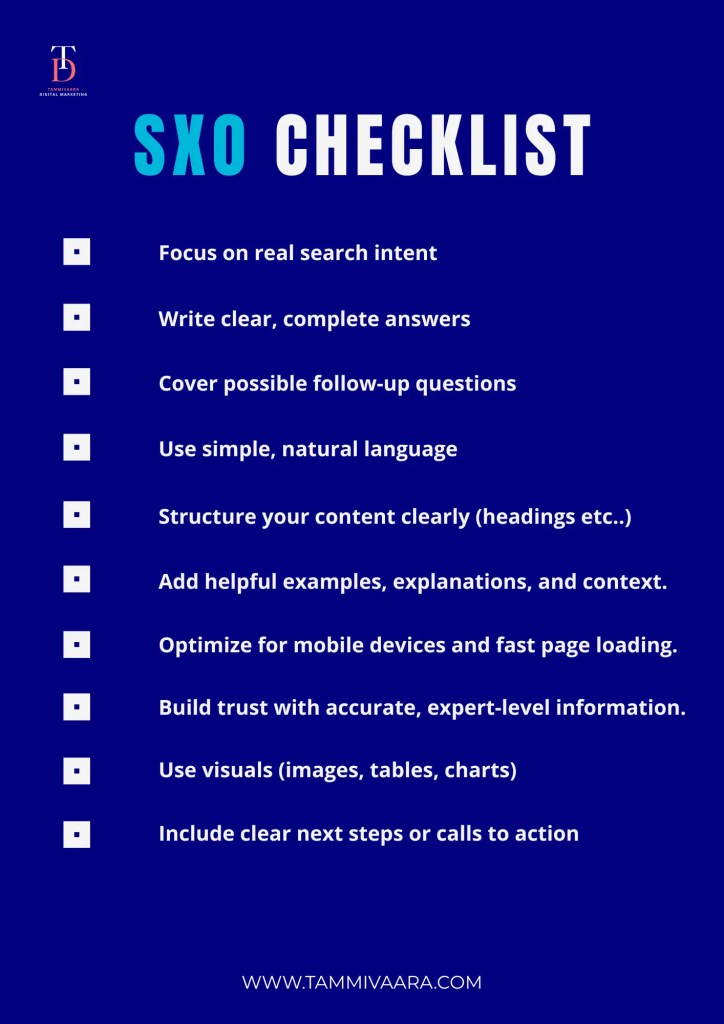
Download the full SXO Checklist (PDF)
Final Thoughts
AI is changing search. Today, success is not about ranking for keywords. It’s about helping people.
SXO is the new SEO. If you focus on real questions, complete answers, and a great user experience, your content will stay strong even as AI search grows.
Need help creating AI-ready SEO content in Finnish?
Check out my Finnish SEO services here.
 Tammivaara Digital Marketing
Leave a comment